
One of the questions I hear most often is:
“So…once the author finishes writing, isn’t the book basically done?”
Not even close. In many ways, typing “The End” is where the real work begins.
At Pilcrow Publishing, every manuscript begins its own journey after that first draft. It’s a process that requires patience, collaboration, and countless small decisions, many of which readers will never notice. That’s the point.
Here’s a glimpse behind the scenes.
Developmental Editing
This is where we step back and look at the story as a whole.
Are there missing pieces? Does the pacing feel right? Are there places where readers may need more context, or less? Sometimes chapters move. Sometimes entire scenes are rewritten. Sometimes we realize the strongest ending was hiding twenty pages earlier.
Line Editing
Once the structure feels solid, we begin polishing the writing itself.
We smooth awkward sentences, eliminate repetition, improve transitions, strengthen dialogue, and make sure every page sounds authentically like the author’s voice—not the editor’s.
Fact Checking & Research
For memoirs especially, accuracy matters.
Dates, names, locations, timelines, newspaper articles, interviews, and historical details are all reviewed as carefully as possible. Every detail helps preserve the integrity of the story.
Multiple Review Passes
No manuscript is edited once. Or twice. Or even three times.
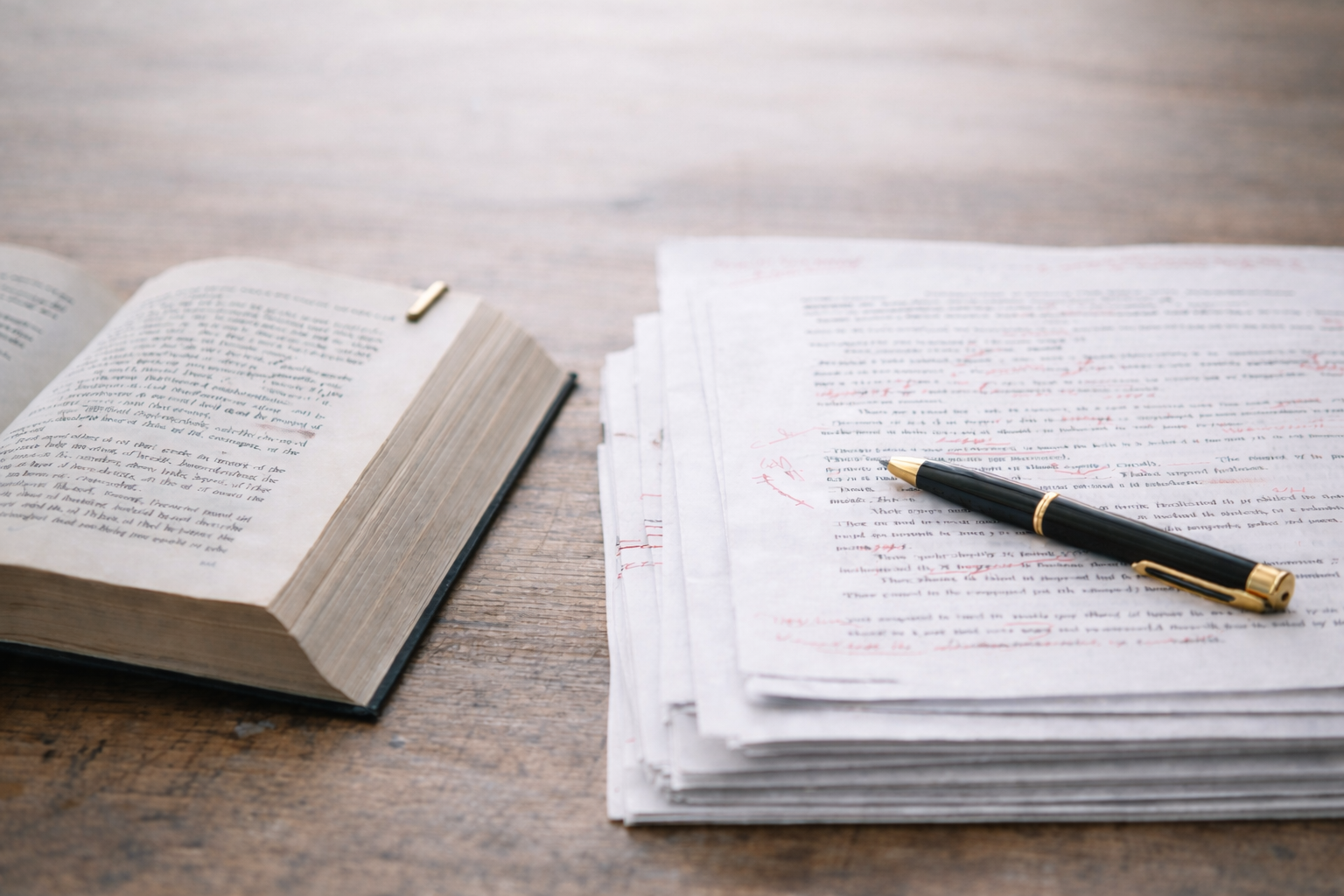
Each pass has a different purpose. One focuses on structure. Another on style. Another on consistency. Yet another catches the tiny things that somehow survive every previous read.
Even then, we continue reading with fresh eyes.
Interior Design
The words matter, but so does how they appear on the page.
Margins, fonts, spacing, chapter openings, photographs, artwork, page numbers, and front matter all come together to create a reading experience that feels effortless.
Readers rarely notice good interior design, but they absolutely notice bad interior design.
Final Proofing
This is where we’re reading one last time, often from printed pages instead of a screen.
It’s amazing what a printed manuscript reveals that a computer somehow hides.
Then…
Only then…does the manuscript become a book.
Right now, we’re living in these pages with our first two Pilcrow authors. Every day brings another revision, another conversation, another tiny improvement that moves each story closer to the shelf.
It’s slow, intentional, and sometimes invisible work. But it’s also the work that transforms a manuscript into something readers can hold in their hands for years to come. It’s one of my favorite parts of publishing.
Rooted in Story.
Marking the Beginning of Every Story.